
My Fishkill clients love their home. They expressed that this is their forever home. They often watch their grandkids, have many memories here, and talk of building more in the future. But, like many of us, they see problems with the space for long-term living. Their bathroom is one concern as they consider having to navigate the small bathroom with potential mobility issues.
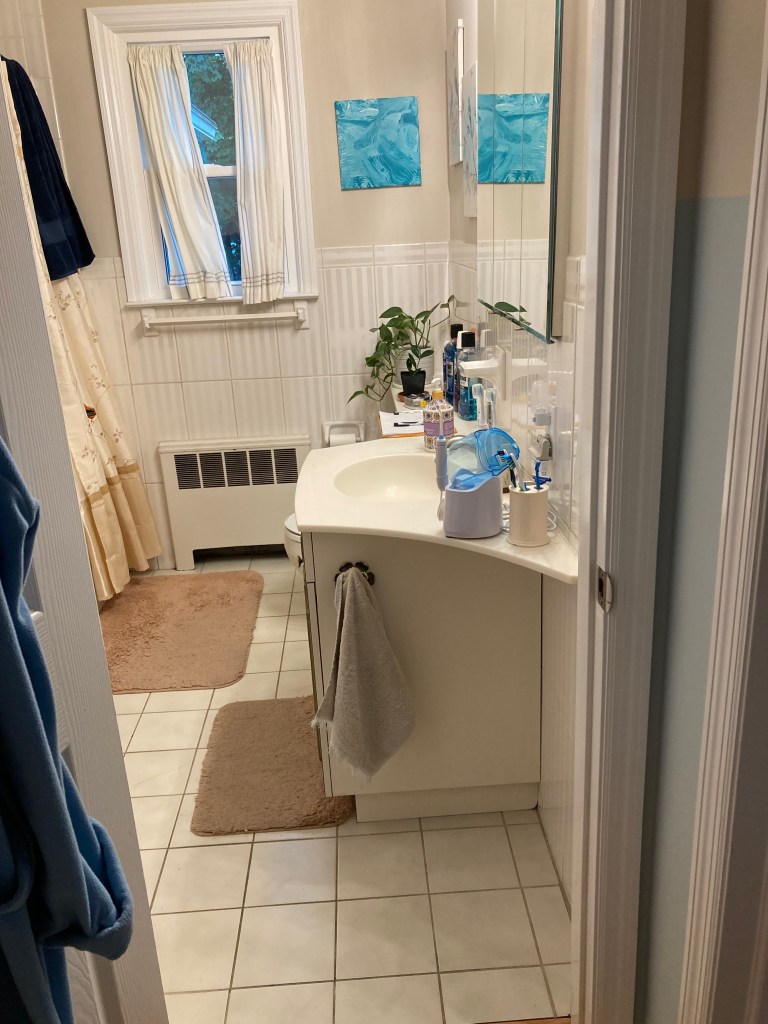
The bathroom layout had several constraints to designing a more accessible bathroom. ADA compliance is not always possible with a limited amount of space. However, you can often discover solutions within a space if you are creative. Our Operations Manager is a Certified Aging in Place Specialist (CAPs). The President of the company holds this certification as well. For this project, I collaborated with them closely. We ensured that we found the best solution for the space. We avoided moving walls or undergoing major reconstruction of their home.
The biggest issue in the original layout was maneuvering past the sink to enter the bathroom. The Homeowners requested to remove the tub and make this a walk-in shower. They were also willing to give up the built-in linen cabinet beside the tub to create more space. Although they were struggling to visualize a better layout.
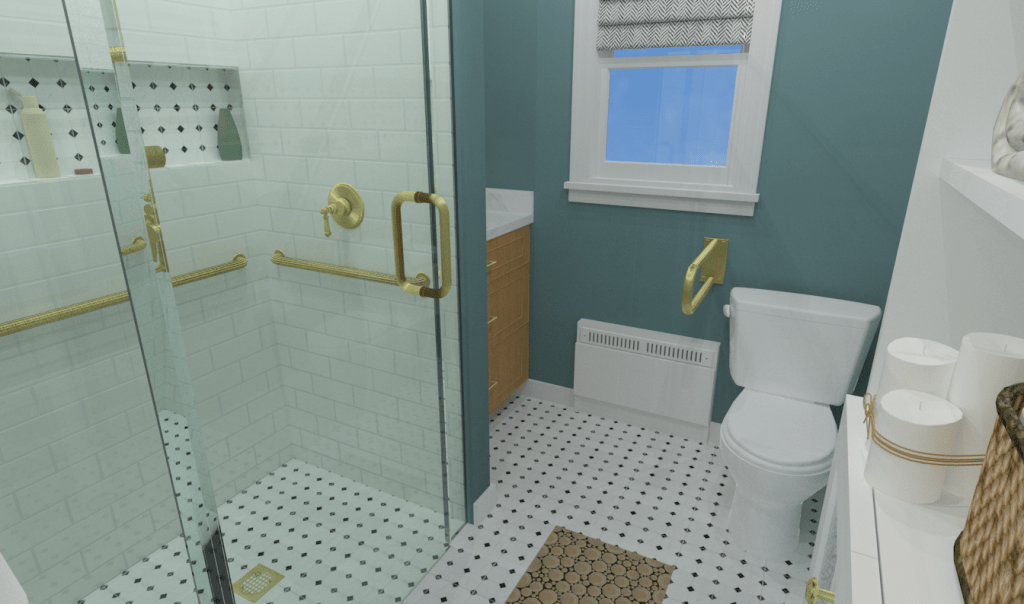
We decided to move the vanity and shower area to the far wall. We rotated the toilet to create a more open footprint. Rotating the toilet also allows for ease of access. Many people wish to move a toilet to a new location. However, it’s important to understand the construction of the home. You need to consider whether extra plumbing is required due to pitch or the vent stack location. Also, it can be necessary to sister beams for more structural support due to the run of joists.
Most of the time, it can be done. However, the extra expenses can make the change not worth the effort. For my clients, this change had more benefits than issues and we opted to include the rotation in the design.
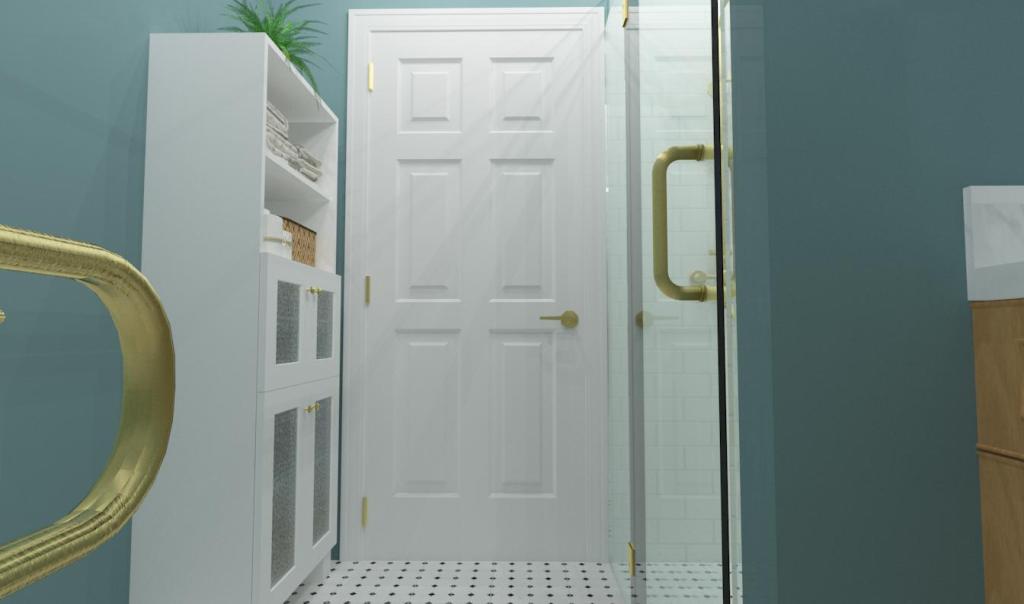
There is a free-standing cabinet for storage. If a wheelchair or walker becomes necessary at any point, they can remove it to gain more space. We needed to pack out the wall and frame a new rough opening for the door. This allowed for a narrow cabinet to be placed behind the door.
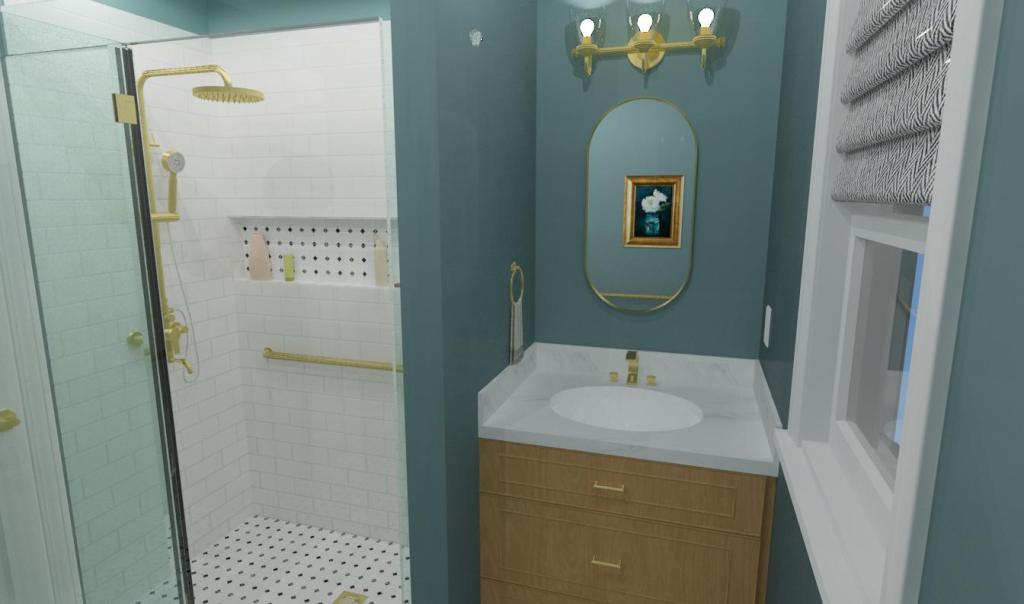
In this design, the shower was relocated to the left and a large niche was added to the back wall. Consideration of depth is always important when designing a walk-in shower in a tight space. In this case, a splash panel would not work and it is recommended that they use a door. Over-spray can be an issue. Homeowners need to understand that a bath mat or towel will be necessary.
The rendering shows a hinged shower door. Yet, there are other options like a barn or sliding door style that may be preferable. The hinged door was purposely displayed to prompt the conversation. The alcove vanity area allows for storage and keeps the door area clear from obstruction.
If you live in the Hudson Valley and are considering a project, click here to learn more about DBS Remodel.
 Corinne Bentley-Morales